

Is Upper Back Pain a Sign of Cancer? Understanding the Causes and Warning Signs
Upper back pain is a common problem that affects people of all ages. In most cases, upper back pain results from poor posture, muscle strain, prolonged sitting, or minor injuries. However, some individuals worry that persistent pain could be a sign of a more serious condition, including cancer. So, is upper back pain a sign of cancer? The answer is yes, but only in rare cases.
Most upper back pain is not caused by cancer. Nevertheless, certain cancers can lead to pain in the upper back, especially if they affect the spine, lungs, or nearby tissues. Understanding the warning signs can help you determine when medical attention is necessary.
Can Upper Back Pain Be a Symptom of Cancer?
Although uncommon, upper back pain may occur when cancer:
·Spreads to the bones of the spine.
·Presses on nearby nerves.
·Develops in the lungs or chest area.
·Causes inflammation in surrounding tissues.
·Cancer-related back pain often differs from ordinary muscle pain because it tends to persist and gradually worsen over time.
Types of Cancer That May Cause Upper Back Pain
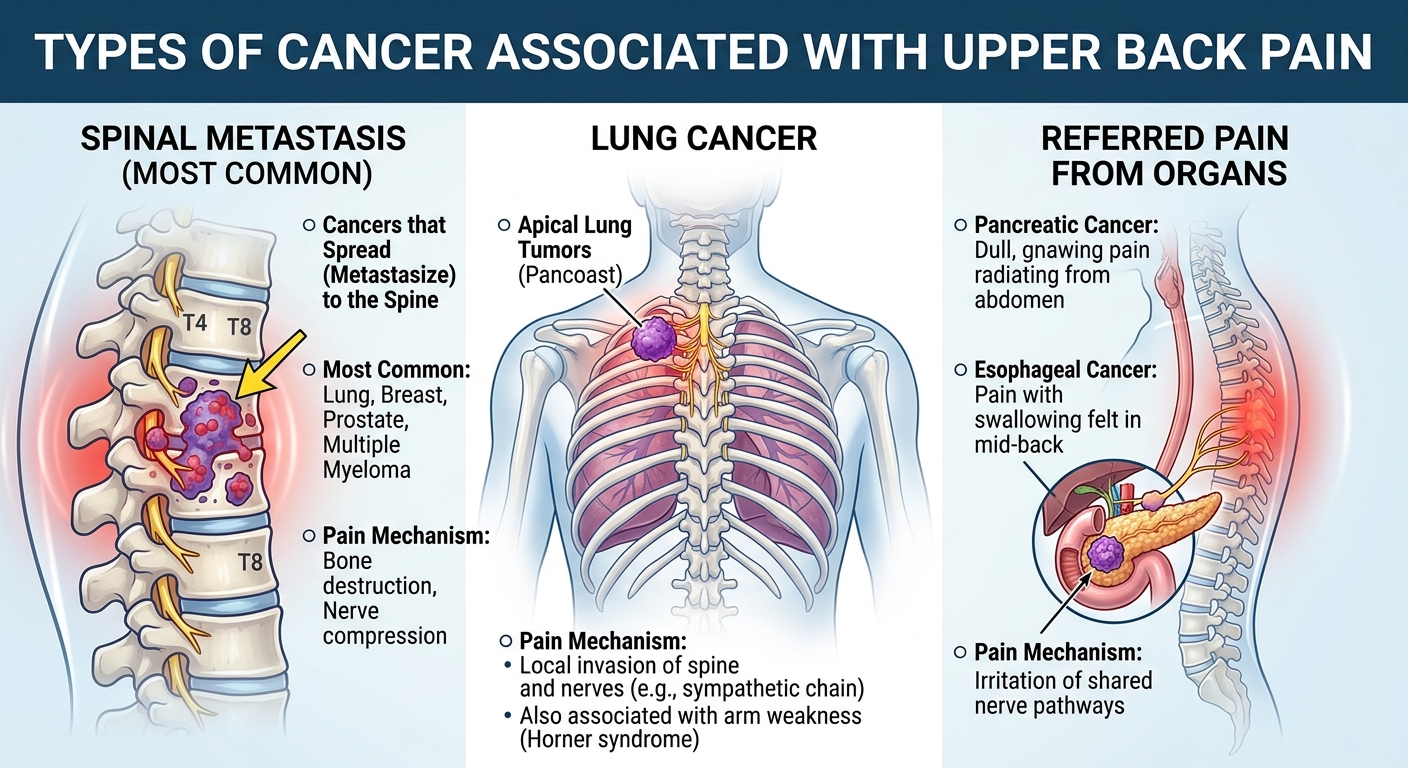
Several types of cancer can sometimes cause upper back pain, including:
·Lung cancer.
·Breast cancer.
·Spinal tumors.
·Multiple myeloma.
·Metastatic cancer that spreads to the spine.
·In many cases, back pain is not the only symptom present.
Warning Signs That May Indicate Cancer
Seek medical evaluation if upper back pain is accompanied by:
·Unexplained weight loss.
·Persistent fatigue.
·Night sweats.
·Fever without a known cause.
·Weakness or numbness.
·Loss of appetite.
·Pain that worsens at night.
·Pain that does not improve with rest.
Common Non-Cancer Causes of Upper Back Pain
Fortunately, most upper back pain is caused by non-cancerous conditions, such as:
·Poor posture.
·Muscle strain.
·Herniated discs.
·Osteoarthritis.
·Stress and tension.
·Sports injuries.
·These conditions usually improve with rest, exercise, and physical therapy.
When Should You See a Doctor?
You should consult a healthcare professional if:
·Pain lasts longer than several weeks.
·Symptoms become progressively worse.
·Daily activities are affected.
·Neurological symptoms develop.
Conclusion
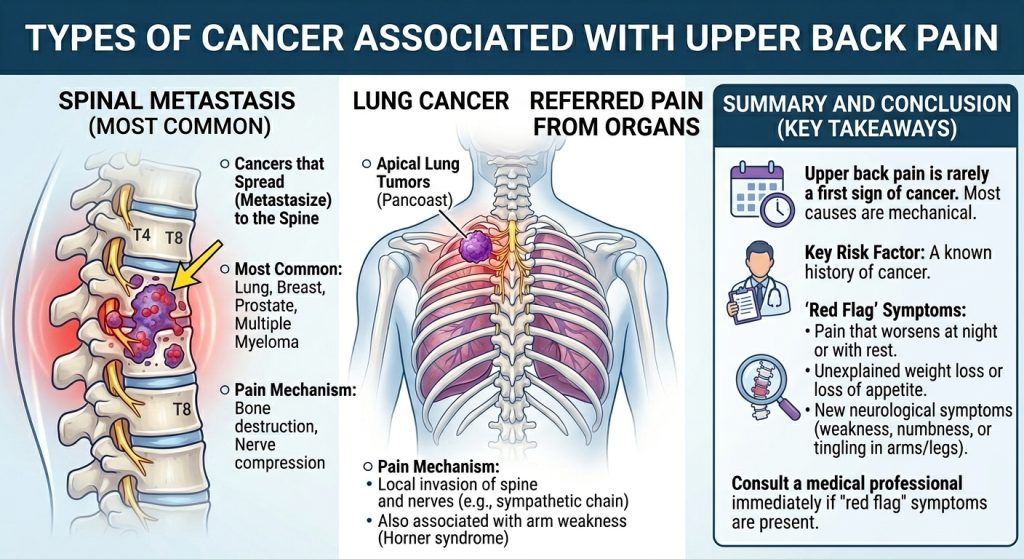
So, is upper back pain a sign of cancer? In rare cases, yes. However, most upper back pain is related to muscle strain, poor posture, or other non-cancerous conditions. Persistent pain accompanied by warning signs such as unexplained weight loss, fatigue, or night pain should always be evaluated by a healthcare provider for an accurate diagnosis and appropriate treatment.


amazing